Gujarat, India — September 20, 2025** — In a sweeping move aimed at cutting India’s dependence on foreign shipping services and boosting its maritime power, Prime Minister Narendra Modi today inaugurated development projects worth **₹34,200 crore** in Bhavnagar, Gujarat. The multifaceted initiative spans ports, shipbuilding, and infrastructure upgrades — with an eye toward making India self‐reliant in marine logistics by 2047.
### Projects Worth ₹34,200 Crore: What’s Being Built
Modi’s inauguration encompasses:
* New and upgraded port terminals for quicker, more efficient handling of cargo
* Expansion of shipbuilding yards
* Enhanced supporting infrastructure (road links, warehousing, and logistics facilities)
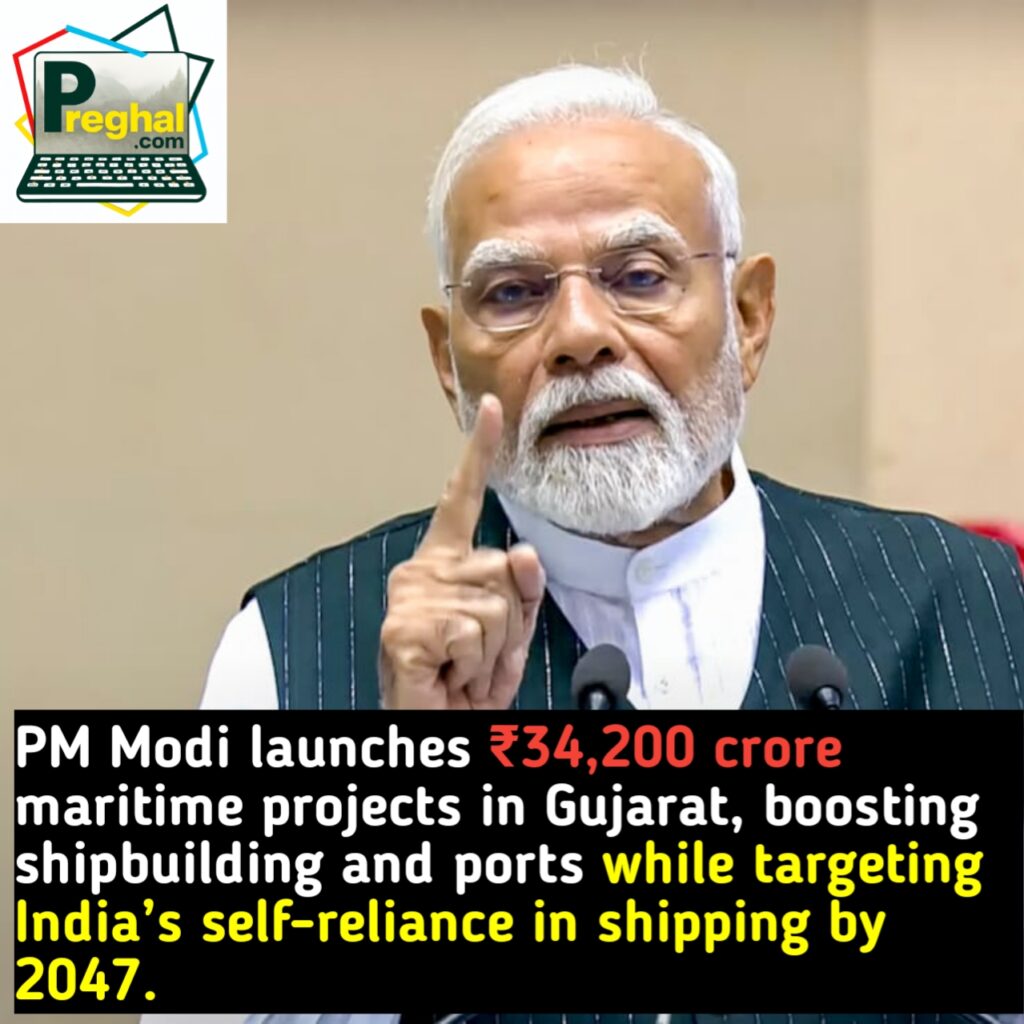
These projects are part of a strategic plan to reduce India’s annual spending on foreign shipping services — currently running into **₹6 lakh crore**. By developing ports and shipyards domestically, India plans to keep more of its shipping trade in‐house, creating jobs, improving security, and lowering costs. ([X (formerly Twitter)][1])
### “Infrastructure” Classification for Shipbuilding: What It Means
One of the standout announcements is a policy reform: large ship construction is now to be officially classified as **infrastructure**. This classification opens up avenues for:
* Easier access to low-interest public funding and long-term loans
* Incentives under government infrastructure schemes
* Better credit and tax treatment in financial evaluations
Analysts say this move could dramatically reduce financing costs for shipbuilders, making domestic projects more competitive with international peers.
### Self-Reliance by 2047: Bigger Picture & Vision
Modi emphasized that maritime self-reliance is central to India’s ambition of economic freedom by **2047**. That means:
* Reducing import dependency in shipping
* Building domestic capability in shipbuilding
* Promoting “Make in India” not just for electronics and semiconductors, but for ships and port infrastructure too
At the inauguration, Modi also interacted with children, underlining the human side of India’s development story. These public engagements help connect such large-scale government efforts with civic pride and national identity. ([X (formerly Twitter)][1])
### Impacts on Jobs, Economy & Strategic Autonomy
The projects are expected to deliver multiple benefits:
* **Job Creation:** Shipyards, logistics, and port operations will demand large skilled and unskilled labor forces.
* **Economic Efficiency:** Reduced reliance on foreign shipping means lower foreign‐exchange outflows, faster supply chains, and stronger domestic industries.
* **Strategic Autonomy:** Ports are a critical part of national infrastructure, relevant in defense, trade, and disaster response. Domestically built and managed ports give India more control.
### Challenges & What to Watch
While the investment is ambitious, several challenges loom:
1. **Financing and Implementation Delays** – Mega-projects often face cost overruns and delays. How quickly the ₹34,200 crore will be disbursed and deployed matters.
2. **Skilled Workforce** – Scaling up requires trained shipbuilders, marine engineers, port managers, etc. India will need to invest in skill development.
3. **Environmental Impact** – Port expansions and shipyards can affect coastlines and ecosystems. Ensuring sustainable development is essential.
4. **Global Competition** – Other countries have well-established shipbuilding industries. India will need to maintain quality, cost efficiency, and innovation to compete.
### Why It Matters Now
* India is currently among the world’s fastest growing economies. Investing in maritime and shipbuilding aligns with global trade trends, supply chain shifts, and rising shipping costs.
* As geopolitics adds uncertainty to global trade routes, having national strength in maritime infrastructure enhances resilience.
* With global climate goals and stricter supply chain regulations, having domestic control over shipping and infrastructure helps India meet international obligations.
—
**Conclusion:** Prime Minister Modi’s ₹34,200 crore push in Gujarat is more than just an infrastructure announcement — it signals a strategic shift in how India views its maritime role. By classifying shipbuilding as infrastructure, investing heavily in ports, and targeting self‐reliance by 2047, India is aiming not only to save on foreign shipping costs but also to become a global hub in marine logistics. As execution proceeds, the success will hinge on financing, skill development, environmental sustainability, and maintaining international competitiveness.